

Why Your Hardwood Floors Look Dull Again So Soon
You mop on Saturday, and by Tuesday the entryway already looks dull. The problem usually isn’t how hard you scrub. It’s how often each part of your floor gets cleaned. This depends on how the floor is used, not just the calendar. A quite bedroom may need only weekly attention, while an entryway, kitchen, or home with pets may need daily dry cleaning and periodic professional maintenance.
This guide gives you a practical cleaning schedule based on room use, household type, and Raleigh’s seasonal conditions. It also explains when routine cleaning is no longer enough and when it makes sense to bring in a professional. For a broader overview of hardwood floor care, methods, and long-term maintenance see; Hardwood Floor Cleaning in Raleigh, NC: Methods, Costs, & Local Tips.
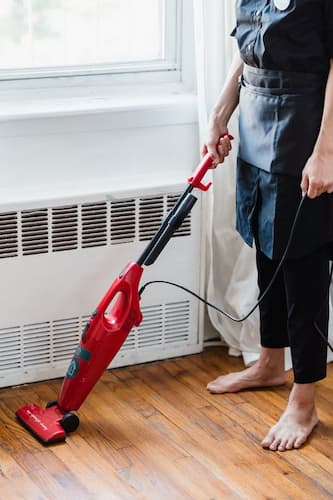
Quick Answer: Find Your Schedule
| Your home | Dry cleaning | Damp cleaning | Professional cleaning |
|---|---|---|---|
| Busy (kids, pets, frequent guests) | Daily or every other day | Every 1–2 weeks | Every 3–6 months |
| Average family use | 2–3 times per week | Every 2–4 weeks | Every 6–12 months |
| Quiet (light traffic, no pets) | 1–2 times per week | Every 3–4 weeks | Every 12–18 months |
Read on for room by-room guidance and Raleigh’s seasonal adjustments.
Grit underfoot acts like sandpaper on your finish. Removing it often is the easiest way to protect your floors.
Start With Your Traffic Level
Begin with the amount of traffic each area receives
| Traffic level | Typical areas | Dry cleaning | Damp cleaning |
|---|---|---|---|
| Light | Guest bedrooms, formal dining rooms | 1–2 times per week | Every 3–4 weeks |
| Medium | Living rooms, main hallways | 2–3 times per week | Every 2–3 weeks |
| Heavy | Kitchens, entryways, family rooms | Daily or every other day | Every 1–2 weeks |
Dry cleaning
This means dust-mopping, sweeping, or vacuuming with a hard-floor setting.
Damp cleaning
This implies using a lightly dampened microfiber mop with a cleaner appropriate for the floor’s finish.
Frequent dry-cleaning matters because grit and debris can act like sandpaper underfoot. Removing them before they are spread across the floor helps reduce fine scratching.
Room-by-Room: Where Dirt Collects Fastest
Different rooms collect different types of dirt. Use this guide to adjust the schedule above.
| Room | Main issue | Practical frequency |
|---|---|---|
| Entryways | Grit, moisture, outdoor debris | Dry-clean daily; damp-clean weekly or as needed |
| Kitchens | Spills, food debris, heavy traffic | Dry-clean daily; damp-clean every 1–2 weeks |
| Hallways | Constant foot traffic | Dry-clean 2–3 times per week; damp-clean every 2–3 weeks |
| Living rooms | General soil, pet hair, dust | Dry-clean 2–3 times per week; damp-clean every 2–4 weeks |
| Bedrooms | Light dust and occasional traffic | Dry-clean weekly; damp-clean monthly |
| Dining areas | Crumbs, spills, occasional heavy use | Dry-clean after use; damp-clean every 2–3 weeks |
Kitchen and entryways need more attention. Entryways are where grit and moisture enter your home. So, keeping them clean protects the rest of the floor. Even in a low-traffic home, these areas collect grit and moisture faster than formal spaces or bedrooms.
Which Schedule Fits Your Home?
A single schedule rarely fits every home. Adjust based on how the space is used and who lives in the house.
Single adult or couple, no pets
- Dry-clean main living areas two to three times per week.
- Damp-clean every three to four weeks.
- Schedule professional cleaning about every 12–18 months.
Family with young children
- Dry-clean entryways, kitchens, and play areas daily or every other day.
- Damp-clean high-use areas every one to two weeks.
- Schedule professional cleaning every 6–12 months.
Homes with pets
- Dry-clean main traffic paths daily or every other day.
- Damp-clean high-use areas every one to two weeks.
- Clean accidents promptly, following the floor manufacturer’s guidance.
- Schedule professional cleaning every 3–6 months.
Frequent guests or entertaining
- Dry-clean entryways and main paths before and after gatherings.
- Damp-clean high-use areas every one to two weeks.
- Schedule professional cleaning every 6–12 months.
These intervals are starting points. The condition of the floor, finish type, and the products used matter more than the calendar alone.
This video covers basic hardwood floor care, including regular dust removal, safe mopping, spill cleanup, and ongoing maintenance. It is a useful visual companion to the cleaning schedule above.
Raleigh Through the Seasons
The seasonal conditions in Raleigh can change how often certain areas need attention.
Spring
Outdoor debris and pollen increase. Dry-clean entryways more often and check mats frequently.
Summer
The humidity rises, and how do you deal with it? See our guide on Summer Raleigh NC: How to deal with humidity. Avoid excess moisture on your hard floors and use only a lightly dampened mop.
Fall
Dirt, leaves, and moisture get tracked indoors. Increase entryway cleaning and inspect mats.
Winter
Indoor heating can dry out the air. Keep entry mats in place and watch for changes in gaps or board movement. Seasonal changes do not require a completely different routine, but they often shift where dirt and moisture enter the home.
Your Routine, Step by Step
Most routine hardwood care can be handled at home with a microfiber dust mop, a vacuum with a hard-floor setting, and a finish-compatible cleaner.
1. Remove loose dirt with a microfiber mop, soft broom, or vacuum.
2. Blot spills promptly with a dry or slightly damp cloth.
3. Damp-mop small sections, using only the amount of cleaner directed on the label.
4. Let the floor dry before replacing rugs or furniture.
5. Check entry mats, furniture pads, and high-traffic areas periodically.
Avoid wet steam mops, string mops, and cleaners not approved for your floor’s finish. Excess moisture and heat can damage both the finish and wood beneath it.
When It’s Time to Call a Professional
Professional hardwood floor cleaning is useful when routine mopping no longer removes embedded soil, or when you want the floor’s condition checked as part of ongoing maintenance.
| Household type | Professional cleaning interval |
|---|---|
| Light traffic, no pets | Every 12–18 months |
| Average family use | Every 6–12 months |
| Pets or young children | Every 3–6 months |
| Heavy traffic or frequent entertaining | Every 3–6 months |
Professional cleaning can remove buildup that regular mopping misses and help identify early wear before it becomes a larger issue.
When Mopping Won’t Fix It
Cleaning removes surface residue and soil. It does not restore a finish that has worn down. Not sure whether it’s time for a professional? If a floor remains dull after proper cleaning, or if wear is concentrated in traffic lanes, the issue may be beyond routine cleaning. Here’s a full explanation of what hardwood floor cleaning can and can’t fix.
How Cleaning Frequency Affects Long-Term Costs
Regular dry cleaning and prompt attention to spills help to preserve the finish, while deferred care can lead to recoating, or refinishing sooner. Wondering what professional care costs? For current pricing and what affects a quote, see Hardwood Floor Cleaning Cost in Raleigh, NC: What to Expect.
Commonly Asked Questions
How often should hardwood floors be vacuumed?
For most homes, once or twice a week. Busy areas such as entryways, kitchens, and homes with pets may need vacuuming every day or every other day, in line with the traffic levels above.
How often should hardwood floors be professionally cleaned?
Quick answer: Every 6–12 months for many homes.
Pets, children, or heavy traffic call for more frequent service. The floor’s condition matters more than the calendar alone.
Does cleaning frequency affect how long a finish lasts?
Yes. Removing grit regularly reduces fine scratching, which helps preserve the finish between maintenance coats or refinishing.
Is it bad to clean hardwood floors every day?
Daily dry cleaning is often helpful in busy areas. Daily damp cleaning can increase moisture exposure if not done correctly.
Take away
Not sure which schedule fits your floors? A professional assessment can check your finish and recommend an interval based on how your home is actually used.