

A practical cleaning schedule for Raleigh homes
Raleigh households don’t all need the same carpet cleaning schedule. A four-bedroom house with kids, dogs (especially double-coated), and year-round pollen has different needs than a one-bedroom apartment with no pets. This guide lays out practical cleaning frequencies for usual Raleigh scenarios. This will help you to plan around your home.
All recommendations are based on typical climate patterns, housing types, and usage in the Raleigh area, along with general industry guidance on carpet maintenance.
Find your schedule at a glance
| Household profile | Deep clean | Vacuuming |
|---|---|---|
| No pets, low traffic | Every 15–24 months | Weekly; spot‑clean as needed |
| One pet, moderate traffic | Every 10–15 months | 1–2 times/week; treat spots promptly |
| Multiple pets or heavy traffic | Every 6–12 months | High‑traffic zones several times/week |
| Allergies or asthma in the home | Every 6–12 months | Coordinated with HVAC and dusting routines |
| Rentals / move‑in / move‑out | at each move‑in and move‑out | Add mid‑lease cleaning with pets or heavy use |
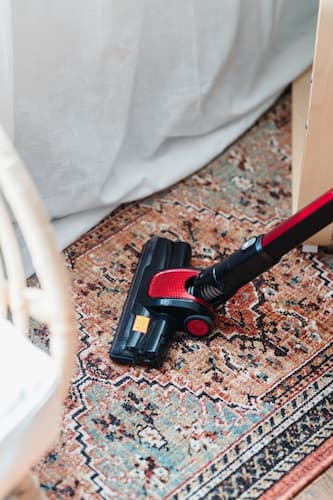
A baseline schedule for Raleigh homes
For an average Raleigh household; no major stain issues, moderate foot traffic, and routine vacuuming, a reasonable baseline is:
- Professional deep cleaning: every 12 to 18 months.
- Routine vacuuming: at least once a week, more often in high-traffic zones.
This baseline assumes:
- No residents with severe asthma or allergies tied to indoor air quality.
- No persistent pet accidents or strong odors.
- No warranty or lease requirements that require more frequent cleaning.
If your situation matches this, you can use the 12-to-18-month window as your starting point and adjust based on the factors below.
Adjusting frequency by household type
No pets, low to moderate traffic
Suggested deep‑cleaning frequency: every 15–24 months, depending on how quickly soil shows up.
This fits homes where:
- One or two adults live in the space, with no children or pets.
- Shoes are left at the door most of the time.
- Carpets look reasonably clean between vacuuming sessions.
You can often stretch beyond 18 months if:
- You vacuum consistently, including edges and under furniture.
- You don’t notice dulling, matting, or odors in high‑traffic areas.
- No one in the home has allergy or respiratory issues tied to indoor air quality.
One pet, moderate traffic
Suggested frequency: every 10–15 months.
This fits homes where:
- There’s one dog or cat, mostly indoors.
- Vacuuming is regular, with occasional spot treatment for tracked‑in dirt or small accidents.
- Some high‑traffic paths are visible (for example, from the front door to the living room or from the kitchen to the back deck).
Lean toward 10–12 months if:
- Your pet spends a lot of time on the carpet.
- You notice lingering odors after minor accidents.
- Carpets in common areas start to look dull or feel stiff underfoot.
For more on how pet issues affect pricing and treatment depth, see: Carpet Cleaning Cost in Raleigh, NC.
Multiple pets or heavy traffic
Suggested frequency: every 6–12 months.
Common signs this is you:
- Two or more pets, or one large/active dog.
- Children playing on the floor, frequent guests, or a busy entryway.
- Visible soil lines, frequent spot cleaning, or recurring odors.
You’re likely on the 6–9-month end if:
- Pet accidents happen more than occasionally.
- You or your family spend a lot of time on the floor (kids, remote work, etc.).
- Odors return soon after DIY cleaning or standard shampoo jobs.
In many Raleigh homes with two dogs, visible soil lanes show up along hallway routes and around favorite resting spots within 6–9 months.
In these cases, the main question is often not just “how often” but “what kind of cleaning.” For an overview of methods and when deeper pet‑odor work is needed, see: Carpet Cleaning in Raleigh, NC.
Households with allergies or asthma
Suggested frequency: every 6–12 months, coordinated with:
- Regular HVAC filter changes.
- Consistent vacuuming with a well‑maintained vacuum (ideally with a HEPA filter).
- Dusting and hard‑floor cleaning to reduce overall particulate load.
This fits homes where: one or more residents have diagnosed allergies, asthma, or sensitivity to dust and dander, and notice symptom flare‑ups after certain seasons or activities (for example, after pollen season or after renovations).
Deep cleaning helps, but it’s only one part of managing allergies and asthma at home. If you’re choosing a provider, look for clear explanations of their process and products; our comparison guide walks through what to ask about methods and pet/odor work.
Rentals and move‑in/move‑out situations
Suggested frequency: at each move‑in and move‑out, regardless of the last cleaning date. Possibly mid‑lease if you have pets, heavy traffic, or stain issues.
This fits homes where: you’re renting a house, townhome, or apartment in Raleigh or nearby (Cary, Apex, Morrisville, etc.), and either:
- Your lease requires a professional carpet cleaning at move‑out, or
- You want the carpets refreshed before moving in.
Many Raleigh property managers and landlords expect a receipt from a professional cleaner at lease end. If you’re comparing providers for this purpose, focus on:
- Clear move‑out cleaning policies.
- Written confirmation that the service meets lease requirements.
- Re‑clean or satisfaction policies in case the landlord requests touch‑ups.
For help evaluating providers for move‑out jobs, see: Carpet Cleaning Companies in Raleigh, NC: How to Compare the Best. For a list of local companies you can contact for quotes, see: Raleigh Carpet Cleaning Providers: Local Companies & How to Get Quotes.
Pet‑specific considerations for Raleigh homes
Pets are one of the major factors that shift cleaning frequency for Raleigh households. This section explains how pet ownership changes your schedule and what to watch for.
How pets change your cleaning schedule
Pets increase:
- Likelihood of accidents and lingering odors especially in favorite spots before they are fully potty-trained.
- Dander and soil tracked into carpets from outside and resting areas.
- Wear in high traffic paths (around feeding areas, door to living room, near beds or crates)
As a result, most pet-owning households in Raleigh benefit from:
- More consistent spot treatment and vacuuming between professional visits.
- More frequent deep cleaning than the baseline 12 to 18 months.
This aligns with the earliest scenarios:
- One pet, moderate traffic – every 10 to 15 months.
- Multiple pets or heavy traffic – every 6 to 12 months.
Surface cleaning vs deep pet‑odor work
It helps to distinguish between routine cleaning and targeted pet-odor treatment:
- Routine vacuuming and basic shampooing mostly address light odors and surface soil.
- Pet urine and strong odors often penetrate: padding, Carpet fibers, and in severe cases, the subfloor.
When odors keep returning after DIY cleaning or standard “steam” jobs, that often means the pad or subfloor is contaminated. A more targeted pet‑odor treatment (enzyme/oxidizer, possible pad replacement, subfloor sealing) may be needed.
For details on how pet stains and odors affect pricing and treatment options, see: Carpet Cleaning Cost in Raleigh, NC.
Practical pet‑owner schedule tips
- Vacuum high-traffic pet zones (near feeding areas, doors, favorite resting spots) 2 to 3 times a week.
- Treat accidents immediately:
Blot, don’t rub.
use an enzyme-based cleaner for urine when possible.
- Plan deep cleanings:
At least every 10 to 15 months with one pet.
Every 6 to 12 months with multiple pets or recurring odor issues.
- Reassess after seasonal changes:
After heavy pollen seasons(spring) if allergies plus pet dander are an issue.
Before/after holiday periods when pets and guest increase traffic.
Seasonal timing in Raleigh
Raleigh’s climate and pollen patterns make certain times of year more practical for carpet cleaning.
| Late spring | Post‑pollen spring clean. A common time to remove tracked‑in pollen and dust, and address soil built up over winter. This works well for households that notice more sneezing, itchy eyes, or dull carpets in spring. |
| Early mid fall | Pre‑holiday fall refresh. Popular for preparing for holiday gatherings, guests, and removing summer dirt before spending more time indoors. Schedules fill quickly in this period, so booking a few weeks ahead helps. |
| Lease turnover | Move‑out and lease‑end timing. End‑of‑month and end‑of‑summer (when many leases turn over) are busy times for move‑out cleaning. If your lease ends in June–August, consider booking 3–6 weeks in advance to secure a slot that aligns with your move‑out date. |
Signs it’s time to clean sooner
Regardless of your planned schedule, certain signals suggest you should move up your nest deep cleaning:
- Stains that keep reappearing after spot treatment.
- Increased allergy symptoms at home that improve when you step out for a while.
- Pet-specific signs: lingering urine smell that returns soon after cleaning and discolored patches in areas where pets frequently rest.
- Recurring odors especially in homes with pets or children.
- Dark traffic lanes or visible soil that don’t lift with vacuuming.
- Upcoming events (gatherings, photos, family visits) where you want the home to look its best.
If you notice several of these, treat them as a prompt to reassess your frequency, not just a one-off issue.
DIY upkeep vs professional cleaning
Professional deep cleaning is only part of the picture. Day-to-day care affects how often you need an expert.
Vacuuming
- You may need 2 to 3 times a week in high traffic zones including hallways, entries, and living room paths.
- Aim for at least once a week in main areas.
- Use slow, overlapping passes, quick pushes mostly redistribute soil.
Spot treatment
- Use a mild, carpet-safe solution and test in an inconspicuous area first.
- Blot spills immeaditely; avoid rubbing which pushes liquid deeper.
- For pet accidents, enzyme-based cleaners are often more effective than general detergents.
When to bring in a professional
Consider a professional cleaning when:
- Odors and soil persist despite consistent DIY care.
- You want a faster drying and deeper extraction than what home machines provide.
Special situations worth planning for
A few scenarios don’t fit neatly into the standard household types but are common enough in Raleigh to mention explicitly.
New homeowners and recently renovated spaces
If you’ve just purchased a home or finished renovations:
- Consider a one‑time deep clean after construction dust settles and before moving in all furniture.
- Then adopt a schedule based on your household type (pets, allergies, kids, etc.).
This helps remove fine dust that regular vacuuming may miss and gives you a clean baseline.
Allergy-focused households
If asthma or allergies are a primary driver:
- Coordinate carpet cleaning with HVAC filter changes, seasonal dusting, and hard-floor cleaning.
- Track symptom patterns: if symptoms improve noticeably after a clean-up, that signals your frequency is appropriate. If not, you may need to adjust other factors (bedding, filters, overall dust control) in addition to carpet cleaning.
How cleaning frequency affects carpet life and warranties
Most carpet manufacturers expect regular maintenance to keep warranties valid. While terms vary, common requirements include:
- Routine vacuuming on a consistent schedule.
- Periodic professional cleaning (often every 12–24 months, depending on the brand).
- Prompt attention to stains and spills.
If your carpet is under warranty:
- Check the specific maintenance requirements in your documentation.
- Keep receipts from professional cleanings as proof of care.
Matching your cleaning frequency to both your household needs and any warranty/lease terms helps you avoid voiding coverage and extends the usable life of the carpet. For renters, it also reduces the risk of losing part of a security deposit over carpet condition.
A simple planning template
Use this as a quick reference when setting your schedule.
| Household profile | Deep clean | Vacuum & upkeep |
|---|---|---|
| No pets, low traffic | Every 15–24 months | Vacuum weekly; spot‑clean as needed. |
| One pet, moderate traffic | Every 10–15 months | Vacuum 1–2 times per week; treat spots promptly. |
| Multiple pets or heavy traffic | Every 6–12 months | Vacuum high‑traffic zones several times a week; consider area rugs in key paths. |
| Allergies or asthma in the home | Every 6–12 months | Coordinated with HVAC and dusting routines. Use a well‑maintained vacuum with good filtration. |
| Rentals / move‑in / move‑out | at each move‑in and move‑out | Add mid‑lease cleaning if you have pets or heavy use. |
Adjust these ranges based on what you observe in your own home.
Commonly asked questions
Is once a year enough for carpet cleaning in a typical Raleigh home?
For most average households, a deep cleaning every 12 to 18 months is reasonable. Scheduling once a year fits well if you have one pet, moderate traffic, or mild allergy concerns. You can often stretch to 18 months in no-pet homes, low-traffic homes that are vacuumed regularly and have no odors or show no visible soil.
Can I extend the time between cleanings if I vacuum regularly?
Yes. Consistent vacuuming (especially in high‑traffic zones) and prompt spot treatment can help you stay toward the longer end of the recommended ranges. This is especially in low-traffic, no-pet homes. If you notice visible soil lanes, more allergy symptoms, or recurring odors at home, those are signs not to delay the next deep cleaning.
How often should I deep clean my carpets if I have pets in Raleigh, NC?
With moderate traffic and one pet, most Raleigh households benefit from a professional deep cleaning every 10 to 15 months. With multiple pets, recurring odors, or heavy traffic, aim for every 6 to 12 months. Prompt spot treatment and consistent vacuuming can help extend the time between cleanings, but persistent odors often mean subfloor or deeper pad issues.
How often should renters in Raleigh clean carpets before moving out?
Most leases expect a professional carpet cleaning at each move-out, regardless of when the last cleaning was done. Some tenants also choose to clean at move-in for freshness. Mid-lease cleaning is worth considering if you have pets, specific lease requirements, or heavy traffic about carpet condition.
About the research behind this guide
Information in this article draws on:
- General industry guidance on carpet maintenance and cleaning frequency.
- Typical housing types, climate patterns, and usage scenarios in the Raleigh area.
- Common lease and warranty expectations for residential carpets.
Every home is different. Use these recommendations as a starting point, then adjust based on your own carpets, household, and any warranty or lease requirements.